 OGP Product Report Cards
Armoury

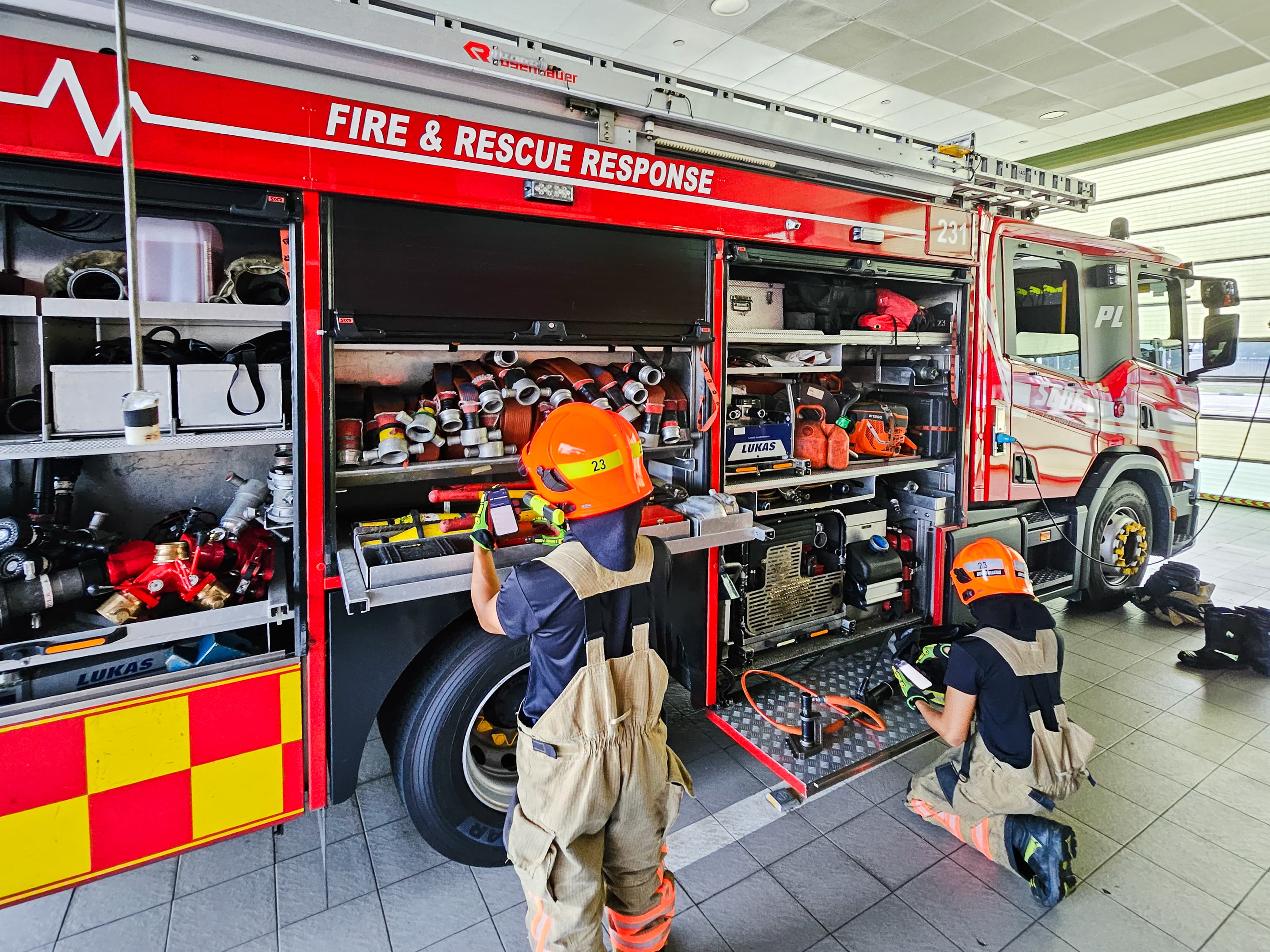
Digitises daily equipment checks for Singapore Civil Defence Force officers
The problem
Singapore Civil Defence Force (SCDF) officers spent over 60 minutes a day on paper checks of vehicles and equipment, and HQ could not see what was done.
Our solution
Armoury lets SCDF officers do daily checks on their phones, so commanders can see completion and issues as they happen.
Quarterly updates
Q3 Metrics
Growthvs previous quarter
Number of High Frequency Checklists Onboarded2,327up 5%
Usage & Uptake Ratevs previous quarter
Avg Submission Rate97.7%up 1.2 pts
No of Submissions (Quarterly)123,087up 8%
Efficiencyvs previous quarter
Median time taken to complete the Pump Ladder Checks (The lower the better)36.8 minsdown 4%
Cost Effectivenessvs previous quarter
Cost per Submission (Quarterly)$1.20down $2.91
Impactful Insightsvs previous quarter
User Satisfaction Rating4.39 / 5up 0.1
Q3 Costsvs previous quarter
Overheads$47.9k33%down 75%
People$47.3k32%down 79%
Security$25.0k17%
Infrastructure$14.5k10%down 1%
Tools$10.4k7%down 54%
Other$2.1k1%down 79%
Total for quarterSum of all costs$147.2kdown 69%
Released in Q3
This quarter, the team focused on making Armoury more reliable, easier for frontliners to use, and easier to maintain as the product moves into a lower-maintenance phase.
- Check windows are now created automatically
Scheduled checks now get their check windows automatically, instead of relying on an engineer to create them manually.
We also backfilled missing historical windows before switching to the automated process.
Outcome
- Manual top-ups are no longer needed.
- 235,319 missing check windows were backfilled and will be available for future Armoury shifts.
- This reduces the risk of missing checklist windows and allows Armoury to keep running without regular engineering intervention.
- Prepared Armoury for a future move to Singpass
Armoury now stores a one-way hashed version of each user’s NRIC when they log in.
Users without a stored identifier are prompted to log in again so their account can be prepared.
Previously, Armoury did not store a stable identifier that could be used to match existing users if authentication moved from sgID to Singpass.
Outcome
Armoury now has the account groundwork needed for a future Singpass migration.
- Reduced the effort needed to keep Armoury running
We improved several parts of Armoury’s infrastructure so the product can run with less day-to-day engineering support.
This included:
• Speeding up heavy database queries
• Reducing database load from scheduled emails
• Making monthly reports recover from missing data instead of failing
• Moving email sending to SES
• Reducing noise from error alerts
Outcome
Armoury no longer depends on Postman key rotation for email sending, reducing ongoing maintenance work.
The product should also require fewer manual interventions as the team moves into maintenance mode.
- Closed remaining security findings
We closed the remaining findings from Armoury’s external security test and cleared the open security scan findings across both Armoury and Pulse.
Known vulnerabilities in third-party libraries were also patched.
Outcome
Armoury ended the quarter with:
• 0 open VAPT findings
• 0 critical reachable findings from Endor Labs
• 0 high reachable findings from Endor Labs
This reduces the security work carried into Armoury’s maintenance phase.
- Improved engineering foundations and handover
We also focused on making both Pulse and Armoury safer and easier to change.
For Armoury, this included documenting the system for future maintainers and improving local development setup.
Across both products, we also improved automated testing, development tooling and support for AI-assisted development.
What changed overall
At the start of the quarter, Armoury still had several manual operational tasks, parts of the old frontliner experience, and maintenance work that depended on engineers.
By the end of Q3:
• Check schedules run automatically
• The new frontliner experience is fully rolled out
• Frontliner satisfaction is 4.29 / 5
• The product is prepared for a future Singpass migration
• Security findings have been closed
• Ongoing maintenance effort has been reduced
The overall outcome is a more reliable Armoury that requires less engineering intervention and is better prepared to continue running after the current team rolls off.
Who’s working on it
4 contributors in Q3
 Product manager30% time
 Engineer10% time
 Engineer20% time
 Engineer40% time
Info
- Status
- In maintenance
- Primary users
- Public officers
- Live since
- 2023
- Website
- armoury.gov.sg


